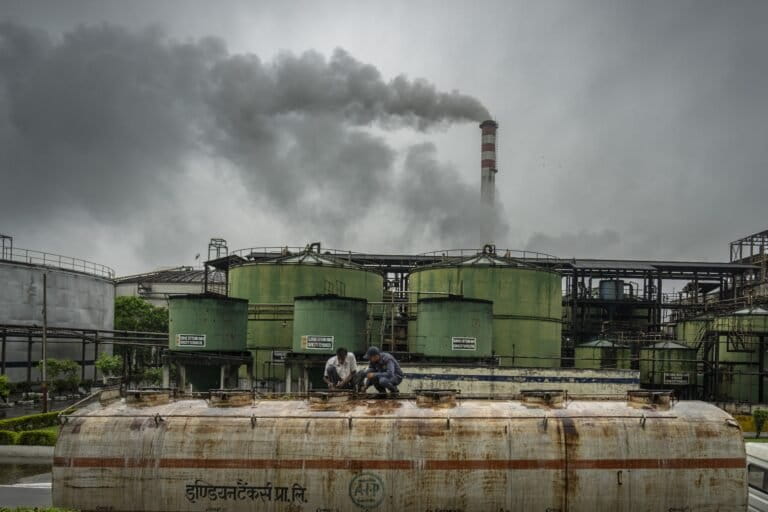
This is the second part in a series comparing India and Brazil’s ethanol transitions. Brazil’s decades-long experience shows that producing ethanol is only half the challenge. This story examines the real test which lies in procurement, storage, transport and quality control, the systems that decide whether ethanol actually reaches the pump reliably. The first part looked at what that difference means for vehicle owners in both countries. At a petrol pump in Bhopal’s Katara Hills, a 40-year-old pump attendant smiles when asked whether customers talk about ethanol-blended petrol. “People come and joke, ‘ganne ka juice bhardo’ (Fill sugarcane juice),” he says, referring to E20 petrol, a blend of 20% ethanol and 80% petrol. In India, sugarcane is one of the main feedstocks used to produce ethanol. The sarcasm reflects the public conversation that has followed the rapid expansion of E20. Videos and posts circulating online have raised questions about the colour and quality of the fuel, its compatibility with older vehicles, and possible changes in mileage or performance. Government agencies and automobile manufacturers have disputed several of these claims. The debate has nevertheless brought attention to how ethanol is transported, stored, blended and tested before fuel reaches a petrol pump. Brazil’s ethanol mission seems to have inspired India to a great extent as the South American country often comes up in India’s ethanol debate, usually as a success story of higher blends. Interactions with people who run Brazil’s ethanol system bring out some crucial lessons for India. For Brazil, where…This article was originally published on Mongabay