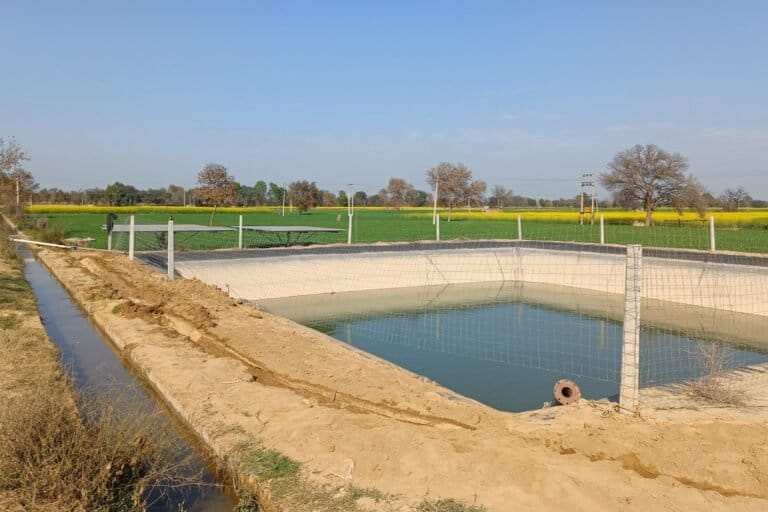
In the sandy fields of Jamal, a village in the Sirsa district of Haryana, water for irrigation does not arrive through a single source. It is mixed, stored, lifted, diluted, timed, subsidised and improvised. Jamal’s landscape first appears dry and exposed: mustard and wheat fields stretch across a semi-arid plain, field channels cutting through farms, sand dunes levelled into cultivable plots, and very few functioning tubewells in the conventional sense. But the most striking feature is the diggi — a pond, often lined and built within the farmland. Mixing canal water and groundwater Canal water has clear agronomic value for a farmer: it is usually fresh, low-cost, and is drawn from Himalayan river flows and monsoon-fed storage. But it has limits. It moves through schedules, rotations, field channels, upstream–downstream hierarchies, tail-end losses and sometimes informal diversion. For farmers, this means canal water is valuable, but rarely fully controllable. It is not “on-demand” irrigation; it is scheduled irrigation. The Green Revolution made these limits sharper. High-yielding crops require water at the right time and in the right amount. This created space for what scholars describe as “atomistic irrigation” which means private wells and pumps that give farmers control, flexibility and timely access. Groundwater offers command. But at times, the groundwater’s quality becomes its biggest limitation. In regions with high groundwater salinity, the water is undesirable for irrigation. Jamal, on the Haryana–Rajasthan border, sits precisely in that type of region. It lies near the tail end of Haryana’s canal system, where canal…This article was originally published on Mongabay