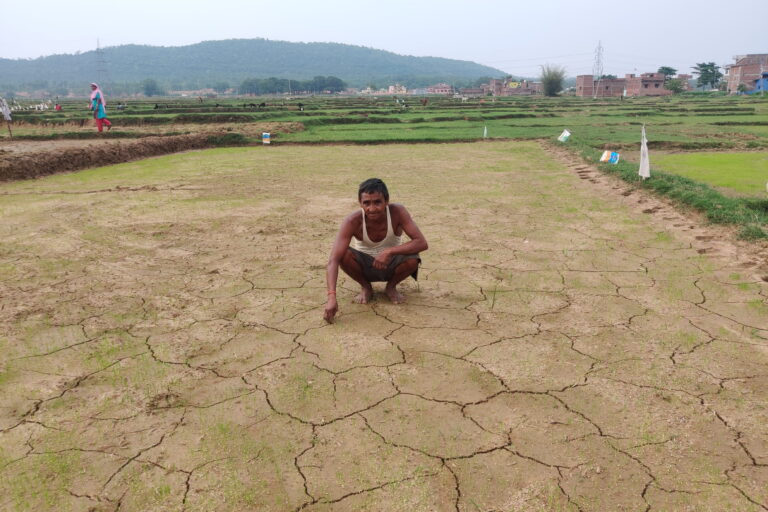
Barun Kumar Yadav from Jharkhand works in Bhilai city in the neighbouring state of Chhattisgarh as a carpenter. At the end of June he went to his village Pathalgada in Chatra district for the sowing season. This is when farmers sow paddy in Jharkhand. Rainfall is extremely crucial for this season. Yadav waited for weeks, but it did not rain sufficiently. Now, the 40-year-old has returned to Bhilai without sowing paddy. Basant Dangi, also from the same village in Jharkhand, managed to set up a paddy nursery using water from a community well. But with insufficient rain, the land has dried and cracks have appeared in his field. “If it doesn’t rain in a day or two, the nursery seedlings will start to wither. The wider the cracks become, the more irrigation will be required. Paddy transplantation can only take place once it rains,” he says. Similarly, in Andreas Topno’s field in the nearby village of Meral, paddy seedlings are ready to be transplanted from the nursery to the field, but the lack of rainfall has changed his plans too. Shankar Dangi, a farmer from Chautha village, waited for the rains and then decided not to sow paddy this year. “It is better to sow maize than to keep waiting for the rain. However, the maize yield will also be low because there has been a delay of 10 days (for the start of monsoon),” he says. In Jharkhand, where kharif sowing season is linked to the monsoon, sowing was…This article was originally published on Mongabay