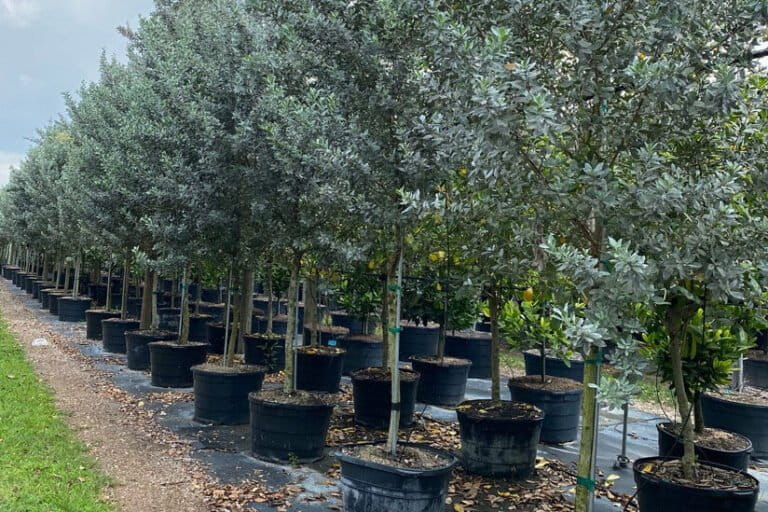
In March, the Karnataka High Court directed the Greater Bengaluru Authority (GBA) to consider the issues highlighted in a public interest litigation (PIL) petition seeking the removal of all Conocarpus trees planted across the city. The high court advisory on Conocarpus, a genus of trees introduced to India from the Gulf, where it has been extensively used in urban landscaping, comes on the heels of prohibitory orders enforced by the state governments of Gujarat, Telangana, Andhra Pradesh, and Tamil Nadu. In August, 2025, based on a report by the Central Empowered Committee (CEC), the Government of India issued a national advisory to all states and union territories to stop the plantation of Conocarpus erectus (buttonwood) and Conocarpus lancifolius (damask) with immediate effect, flagging ecological and public health concerns. The report compared the Conocarpus species with invasive plants such as Lantana camara and Parthenium hysteroporus. How did Conocarpus take over urban India? There are two species of Conocarpus trees found in India, Conocarpus erectus and Conocarpus lancifolius. Of these, Plants of the World Online (POWO), a global digital database of the world’s flora, only recognises the introduction of Conocarpus erectus to the country. However, Achyut Banerjee, a plant invasion biologist and assistant professor at Azim Premji University, Bhopal, says both species, including Conocarpus lancifolius, followed a similar route into the country. “They were brought from their native range to Gulf countries for urban landscaping, and then introduced to India from there,” he said. Over the past decade, Conocarpus has mushroomed in…This article was originally published on Mongabay