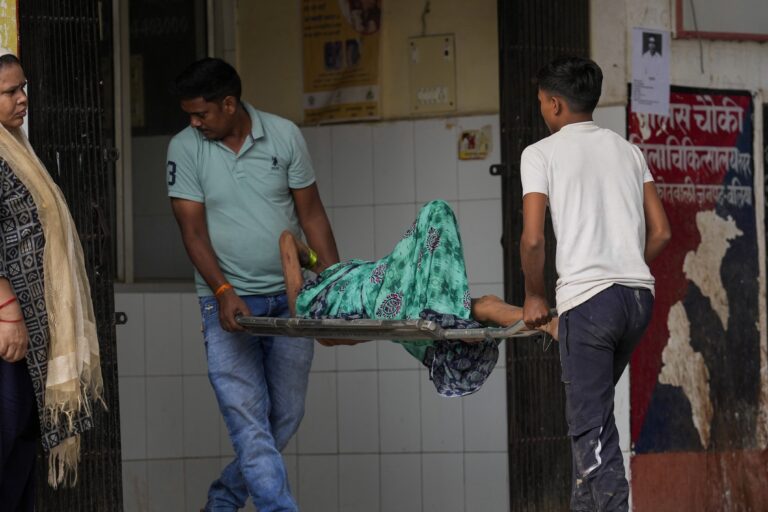
Every summer, as temperatures rise, Heat Action Plans are invoked, labour woes are highlighted, and mortality counts are contested. Yet, nothing changes in the long run. The central question: Are we adequately protecting people’s health? remains conspicuously unaddressed. It is not for lack of evidence. The failure, repeated every year, lies in failure to translate health science into coherent strategy and actions. Across surveillance, research, intervention design, implementation, and governance, health science and public-health principles are often overlooked, distorted, or lost in translation. The quantification trap Expecting public health surveillance to fully account for every heat-related illness (HRI) before mounting a response is a fundamental misunderstanding. First, surveillance systems, by continuously gathering data of selected serious, preventable, and reliably reportable health conditions, are meant to detect signals in time to trigger action. The goal is situational awareness, not a census. As such, the National Heat-Related Illness and Death Surveillance (NHRIDS) focuses on capturing heatstroke, the most severe heat-related illness, in near-real time. Secondly, India’s heat surveillance carries structural limitations. Reporting still depends on manual data entry, which is inherently prone to underreporting. Additionally, unlike malaria or tuberculosis, there are no confirmatory tests for heat-related illnesses to add diagnostic certainty. High-income countries bypass this technologically by extracting syndromic data from electronic health records, and still suffer from undercounting. India’s digital health mission is years behind reaching that level of modernisation. As such, extending surveillance reporting to all heat-related illnesses in our current system adds noise and burden rather than actionable insights. Epidemiologically,…This article was originally published on Mongabay