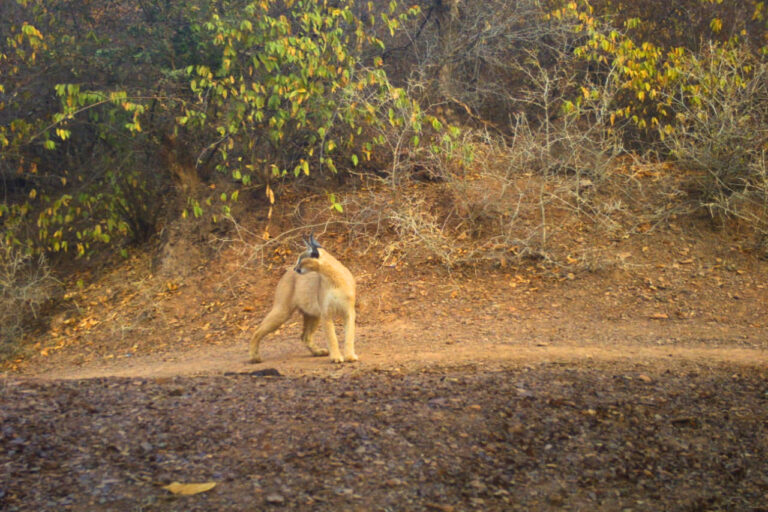
The caracal is one of India’s most elusive wild cats. With its sandy coat, lean frame and distinctive black ear tufts, it is instantly recognisable. Yet sightings are rare, and much of what researchers know about the species comes from scattered records rather than dedicated research. A recent study from southeastern Rajasthan on caracals and their habitats, is looking to change that. Using camera-trap records and habitat modelling, researchers have identified areas likely to support caracals across the Greater Ranthambhore landscape and the environmental features most strongly associated with the species’ occurrence. “Very little was known about its current distribution, habitat requirements, or population status. Most available information came from scattered historical records, opportunistic sightings, and anecdotal observations, making it difficult to develop effective conservation strategies. Our study was motivated by the need to move beyond isolated records and develop a landscape-level understanding of where suitable habitats still exist for the species,” shares Ayan Sadhu, a research scientist at the National Tiger Conservation Authority and Wildlife Institute of India, and a corresponding author of the study. A landscape beyond the tiger reserve The study focused on the Kailadevi landscape, which forms the northern extension of Ranthambhore Tiger Reserve. Situated between Banas and Chambal rivers, the semi-arid region is a mosaic of scrub forests, rocky plateaus, ravines and villages. It supports a diverse carnivore community that includes tigers, leopards, wolves, striped hyenas and jungle cats. To understand how caracals use this landscape, researchers deployed camera traps at 177 locations between January…This article was originally published on Mongabay