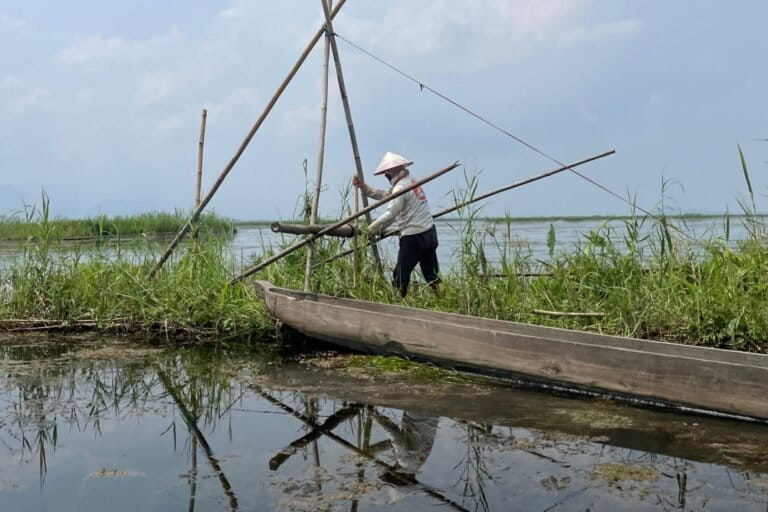
Loktak lake is northeast India’s largest freshwater wetland and is the ecological heart of Manipur. The lake spans about 287 square kilometres, about half the size of the capital Imphal, and is already under growing stress from pollution, altered hydrology and catchment degradation. Now, a new study warns that climate change could further reduce the fish habitat that sustains livelihoods and food systems. The study published in the journal Ecological Indicators finds that rising temperatures and shifting monsoon patterns could reduce habitat suitability for native fish species. Using predictive methods, researchers have mapped out how a changing climate will fundamentally alter the lake’s water depth, temperature, and oxygen levels. Loktak is an indelible part of the Manipuri identity — lives, lore, legends, history, and aquatic ecosystems. It was designated a Ramsar site in 1990, and made its way into the Montreux Record, a register of wetlands that face significant ecological threats, in 1993. Loktak in Manipur is northeast India’s largest freshwater wetland. Amidst growing stress from pollution, altered hydrology and catchment degradation, a new study warns that climate change could further impact fish habitat that sustain livelihoods and food systems. Image by zehawk via Flickr (CC BY-NC-ND 2.0). Fish habitat under threat “We wanted to gauge the health of the entire lake,” says Vicky Anand, lead author of the study. “Fish are considered the most sensitive indicator of a water body’s health. We bypassed harder pollution-tolerant fish that can survive anywhere, choosing instead the rohu (Labeo rohita), an indigenous carp,…This article was originally published on Mongabay