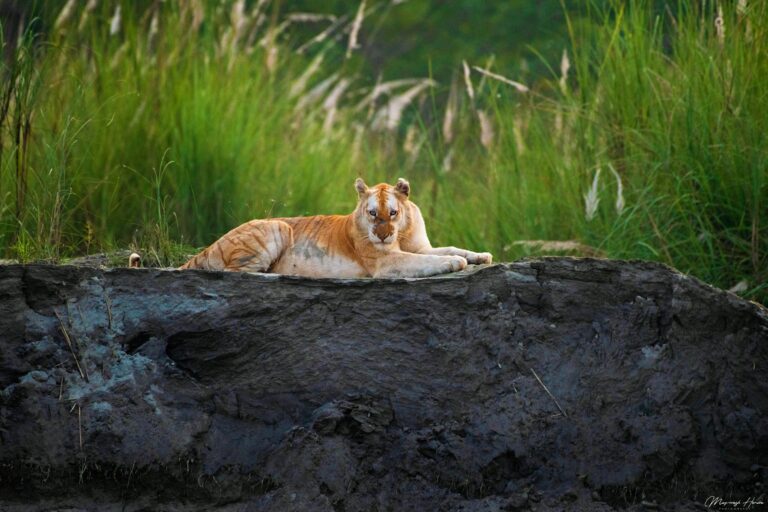
On the morning of January 3, 2026, wildlife biologist Sanjay Gubbi posted on social media that an “ultra-rare” leopard colour morph had been recorded in Karnataka’s Vijayanagara district for the first time. The camera trap image obtained by Gubbi and his team at the Holématthi Nature Foundation (HNF) showed an Indian leopard (Panthera pardus fusca) — a female estimated to be six to seven years old — sporting a pale reddish-pink coat and light-brown rosettes, unlike the typical tawny coat and black rosettes. In a statement by HNF, Gubbi shared that the recorded individual is consistent with erythrism or hypomelanism, “a genetic condition involving either an excess of red pigmentation or a deficiency of dark pigmentation”. “To give the colour morph a native identity and reflect Karnataka’s cultural heritage, we have named it the sandalwood leopard,” Gubbi wrote in a post explaining the rationale for naming the colour morph after the Karnataka state tree. Internationally, such leopards are known as strawberry leopards, and there have been a handful of records from South Africa and Tanzania before. But, until now, only one such individual has been reported from India, in Ranakpur, Rajasthan. This begs the question: What are colour morphs, why do they occur, and how do they impact animals? A leucistic blackbuck spotted in Kanjira Deer Park in Gujarat. Image by Joy Macwan. How does an animal get its colour? Be it the black and white stripes of a zebra, the rosettes of a leopard, or the orangish hair of…This article was originally published on Mongabay