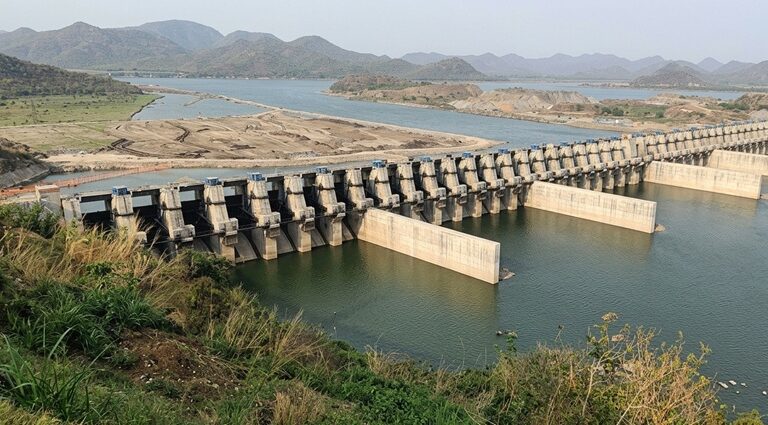
Manglu Dorla’s house stands where the forest opens into the Sabari river in Konta, a village in the Sukma district of southern Chhattisgarh. Dorla’s family has farmed the land for generations. The forest supplies the fuel, fodder, and food. Now, he fears that he may be forced to abandon his home, along with other residents of the village. This fear stems from a dam being built more than a hundred kilometres downstream on the Godavari river in Andhra Pradesh. Will that project affect his village? He and other residents of Konta are unsure. “None of us wants to leave our home,” Dorla said. The Polavaram Irrigation Project (PIP), is located on the Godavari river near Ramanayyapeta in Polavaram mandal, Andhra Pradesh. It is about 42 kilometres upstream of the Sir Arthur Cotton Barrage, where the river emerges from the Eastern Ghats and enters the coastal plains of Andhra Pradesh. The elevation of the structure is 45.72 metres or 150 feet. Sabari, a tributary of the Godavari river, originates in the Eastern Ghats in Odisha, forms part of the boundary between Odisha and Chhattisgarh, and later enters Andhra Pradesh before joining the Godavari. The Polavaram project The Polavaram Irrigation Project’s construction began in 2004, after decades of interstate negotiation stretching back to a 1980 agreement signed when today’s Chhattisgarh was still part of Madhya Pradesh. The project aims to create irrigation potential for 2.91 lakh hectares, generate 960 MW of hydropower, supply drinking water to 28.5 lakh people in 540 villages,…This article was originally published on Mongabay