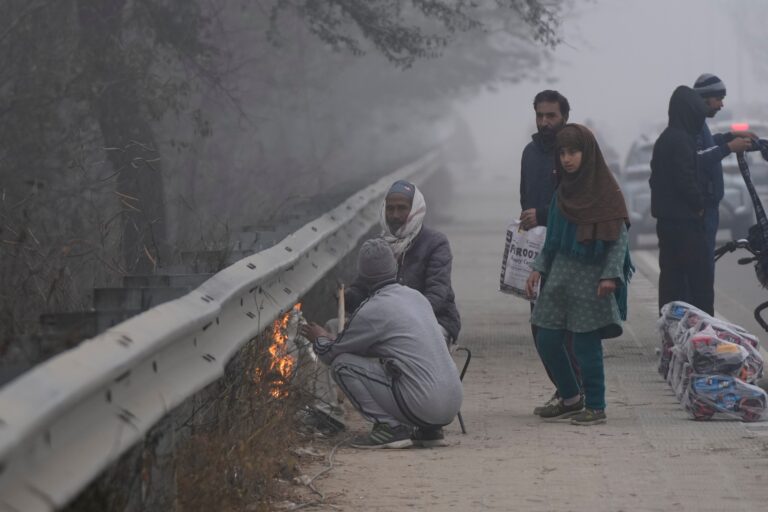
Much of India — including parts of south India — has been experiencing unusually cold weather in the new year, more notable compared to the typical January pattern. Experts attribute these conditions to local, regional and remote — from the Arctic to the Pacific — influences and climate change patterns. The India Meteorological Department (IMD) and media reports show a cold condition affecting northern and central India, with unusually low temperatures and dense fog disrupting daily life. Delhi recorded one of its coldest January mornings in recent years, with temperatures dipping to 3.2°C on January 13. Cities across Haryana, Punjab, and Rajasthan recorded near-freezing temperatures, while Gurugram, in the National Capital Region, registered a chilling 0.6°C, among its lowest readings in close to 50 years. Parts of northern India remained colder than several Himalayan hill towns. Gujarat, where winters are usually mild, has been experiencing a rare cold spell, with night temperatures in Saurashtra and the central and southern regions dropping into the single digits. Minimum temperature below normal by 2-3°C was recorded at many places in Karnataka too. Several factors are at play Multiple factors influence the cold weather experienced in the Indian region during these days, atmospheric scientists explained. “One of the primary contributors is a high-pressure system over north-central India, typically characterised by cloud-free skies and cold, dry air,” said Vijaykumar P., an assistant professor at the Department of Environmental Sciences, University of Kerala. “In many parts of central India, negative anomalies are observed in both daily…This article was originally published on Mongabay