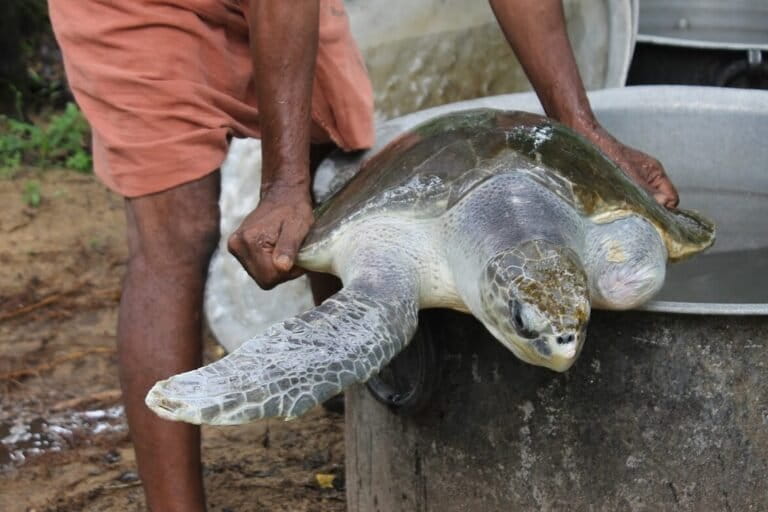
On a humid morning at Kolavipalam beach in Kozhikode, at one of Kerala’s earliest community-led turtle conservation sites, volunteer Abdul Rahman walks slowly along the fenced hatchery enclosure, scanning the sand for any sign of disturbance. Two decades ago, he recalls, this stretch of the coast regularly recorded dozens of olive ridley nests each season, attracting conservationists, students, and eco-tourists eager to witness hatchlings returning to the sea. Today, months can pass without a single nesting sighting. Just two days before this, the Union Finance Minister Nirmala Sitharaman announced, in her budget speech, a proposed “turtle trail” tourism initiative along the coasts of Kerala, Karnataka, and Odisha. “The minister talks about turtle tourism,” says Rahman, looking toward the rock-armoured shoreline. “But first, we need turtles. Almost every night, we patrol the beach and find nothing.” Kolavipalam once symbolised the success of community-driven marine conservation in Kerala, where local fishers maintained day-and-night vigilance against sand mining that could destroy hatcheries. Fishers here have long used turtle-excluding devices in fishing nets, and hatchery maintenance continues, but nesting numbers have declined sharply. Why sea turtles matter Sea turtles play a crucial ecological role in maintaining the health of marine and coastal ecosystems. By grazing on seagrass beds and controlling jellyfish populations, they help sustain marine biodiversity and support fish populations that coastal communities depend on for livelihoods. Nesting activity also contributes to nutrient cycling on beaches, enriching coastal vegetation and stabilising dune ecosystems that protect shorelines from erosion. Globally, all species of sea…This article was originally published on Mongabay