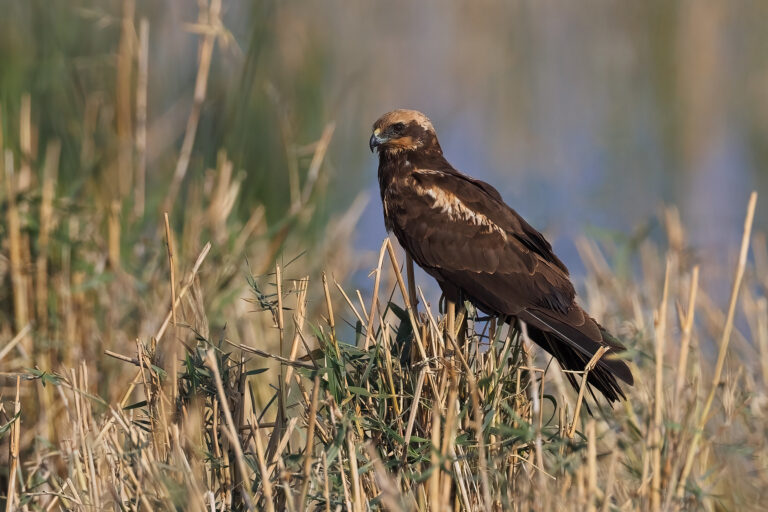
Harriers are best known for their low, buoyant flight in a zig-zag, back-and-forth pattern while hunting for prey, and their spectacular ability to pass food to each other in mid-air. They are diurnal raptors, birds of prey active during the day, that have uniquely adapted to open natural ecosystems such as grasslands and wetlands. Part of the Accipitridae family, these birds feed on small birds, rodents, reptiles, and insects. India’s fragmented savannah-grassland ecosystems serve as the wintering grounds for six of the 16 harrier species present globally. The subcontinent is home to the world’s largest roost of the near-threatened pallid harrier (Circus macrourus) and Montagu’s harrier (Circus pygargus). Most ecological studies on harriers in Asia have been limited to mapping their migration routes, roosting sites, population trends, and food preferences. In a recent paper published in Oikos journal, scientists from the Ashoka Trust for Research in Ecology and the Environment (ATREE) have demonstrated that migratory harriers contribute to the regeneration of India’s savannah-grassland ecosystems through a secondary seed dispersal method known as diploendozoochory. Diploendozoochory is an indirect seed dispersal mechanism where carnivores that prey on seed predators unintentionally consume the seeds in the digestive tracts of their prey and later expel them intact and viable for germination. Between October 2016 and April 2023, the research team collected 3,216 pellets (regurgitated mass of undigested food) from prominent wintering sites of harriers and recorded viable seeds of 137 plant species from these pellets. Seed dispersal is a fundamental process that shapes the…This article was originally published on Mongabay