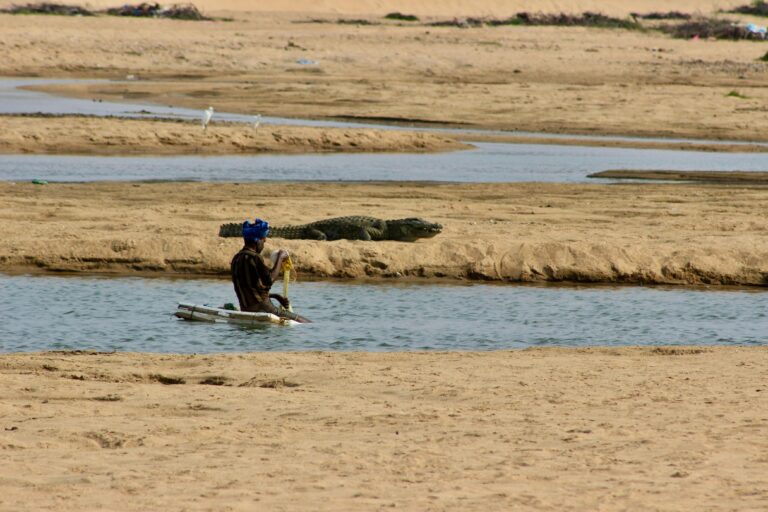
From the rocky gorges of Hogenakkal to the coastal marshes of Muthupet, the mugger crocodile has long inhabited the rivers, reservoirs and wetlands of the Kaveri river basin in southern India. A new study estimated that while there are about 2,209 square kilometres of potentially suitable mugger habitat in the river basin, only about 38% falls within the existing protected area network, leaving much of the species’ habitat exposed to human pressures. The study, published in the journal Ecological Applications, assesses mugger habitat across the entire Kaveri (Cauvery) river basin which stretches across parts of Karnataka, Kerala and Tamil Nadu and covers about 81,155 sq. km. in southern India. “The number that stays with me is 38%. Only 38% of the habitat our model identified as potentially suitable for muggers falls within the existing protected area network. That means roughly six in every ten hectares of meaningful mugger habitat is outside any formal protection, unmanaged, unmonitored, and subject to the full range of human pressures,” says co-author Nikhil Whitaker, the Research Director at Madras Crocodile Bank Trust and Centre for Herpetology. Building a basin-wide picture The mugger is one of India’s three native crocodilian species and is found in rivers, lakes, reservoirs and marshes across much of the subcontinent. Although populations have been studied in river systems such as the Moyar, Kabini and Amaravati, researchers say conservation planning has lacked a basin-wide understanding of where suitable habitat occurs and what factors shape its distribution. “The CRB (Cauvery River Basin) has…This article was originally published on Mongabay