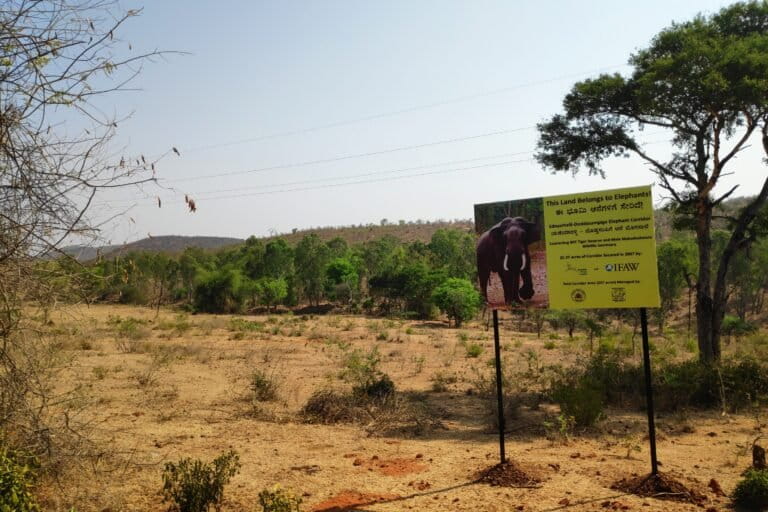
Acquiring agricultural land has been one of the strategies to strengthen elephant corridors in India, framed as a way to enable elephant movement between protected areas and reduce human-elephant conflict, among other reasons. Yet, this strategy approach plays out in complex and fragile rural landscapes with complicated tenurial arrangements, an aspect that has received little attention. “First, they said that the forest was for the tiger. Now, they are saying this land is for the elephant. There has been no change after they bought the land. Elephants are still destroying crops,” said a farmer whose neighbour’s land was acquired to strengthen an elephant corridor connecting the Biligiri Rangaswamy Temple (BRT) Wildlife Sanctuary and Tiger Reserve in Karnataka with the Sathyamangalam Tiger Reserve in Tamil Nadu. Forest officials inspect crops damaged by elephants near Biligiri Rangaswamy Temple (BRT) Wildlife Sanctuary. Acquiring agricultural land has been one of the strategies to strengthen elephant corridors in rural India, a strategy that leaves farmers facing multiple pressures. Image by Ananda Siddhartha. A corridor links separated habitats, enabling animals to move between them, safely. A push for elephant corridors in India gathered momentum in 2005 with the publication of a report titled Right of Passage: Elephant Corridors of India, that identified 88 corridors across the country. The report was the outcome of a collaboration between conservation NGOs, researchers, state forest departments and Project Elephant, a national government initiative to protect the elephant. Since then, the list of corridors has steadily grown. An updated version in…This article was originally published on Mongabay