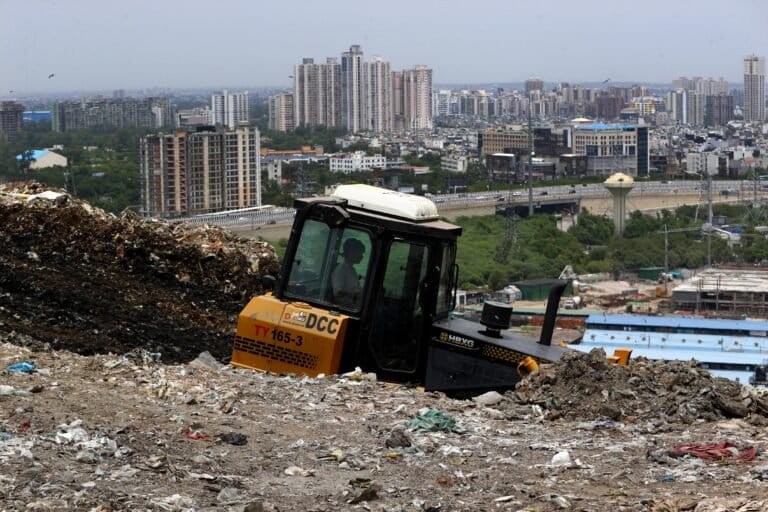
India’s environment ministry notified the new solid waste management (SWM) rules of 2026 on January 27, superseding the 2016 rules. The new rules signal a shift towards a more systematic compliance architecture, with a clearer outline of duties for waste generators, a revised definition of Bulk Waste Generators, and higher landfill user fees for mixed waste to encourage segregation. Well-intentioned as the new rules are, experts caution against gaps in implementation that have dogged solid waste management in India for decades. Illustrating this are the towering landfills in New Delhi — Bhalaswa, Ghazipur and Okhla — symbols of the city’s historical failure to segregate waste at source. Delhi leads all Indian cities, generating approximately 600 grams of waste per person per day. Nearly 64% of the collected waste is processed, according to the Central Pollution Control Bureau (CPCB), while the remaining 36% or. 4,241 tonnes, find its way to unsanitary landfills, or dumpsites everyday. These landfills and dumpsites are silent contributors to air pollution through the year as well as to greenhouse gas emissions and heat stress during the summers. Biomass and waste burning are the second largest contributors to particulate matter emissions in Delhi, contributing 23% to PM10 and 24% to PM2.5, according to one source apportionment study. When biodegradable waste accumulates and is left to rot, it produces methane, which has a warming potential 80 times greater than that of carbon dioxide, over a 20-year-period, and is the second-largest contributor to global warming. According to another study, higher…This article was originally published on Mongabay