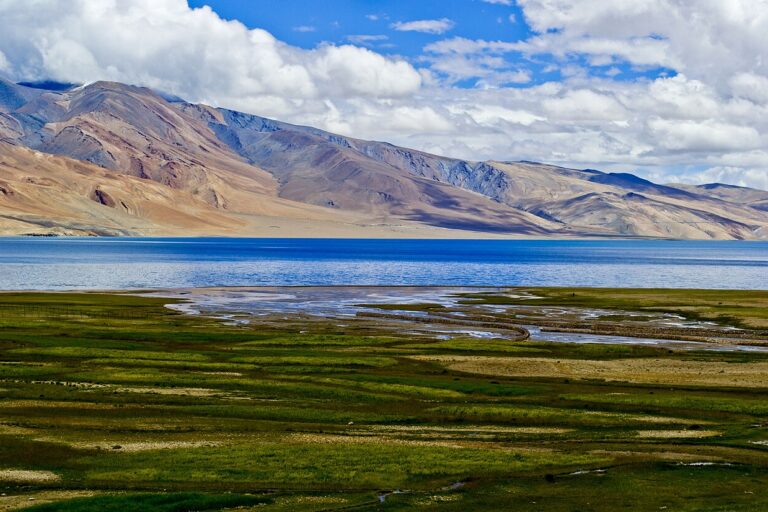
Amid the mountain folds of eastern Ladakh’s Changthang plateau lies Tso Moriri, the highest Ramsar-listed wetland of international importance. Part of a Trans-Himalayan lake-desert ecosystem, the lake remains frozen for nearly one-third of the year and is surrounded by barren hills, broken only by small patches of green meadows and marshes along its northern and south-western shores. These high-altitude ecosystems are increasingly vulnerable to climate warming. As summer arrives, Tso Moriri and the surrounding landscape begin to thaw, activating native microbes that can accelerate warming by releasing greenhouse gases. A recent study explored this process, hypothesising that as cold-adapted microbes become more active, they supply native methanogens — the methane-producing microbes — with compounds such as carbon dioxide and acetate. These compounds fuel methanogenesis, the final stage in the breakdown of organic matter, during which methanogens produce methane and carbon dioxide. This creates a microbe-driven positive feedback loop: warming stimulates microbial activity, which releases more greenhouse gases, leading to further warming. The study set out to determine how strong this feedback could become. Cold-adapted microbes While deserts are ideal habitats for oligotrophic microbes that survive in nutrient-poor soil, the study focused on high-throughput copiotrophic microbes that thrive in nutrient-rich habitats. Copiotrophic microbes consume significantly larger amounts of complex organic matter and release plenty of simple organic matter into the environment. Commenting on the choice of microbes for the study, Raju Biswas, a microbial ecologist and postdoctoral research associate at the Centre for Ecological Sciences, Indian Institute of Science, Bengaluru says,…This article was originally published on Mongabay