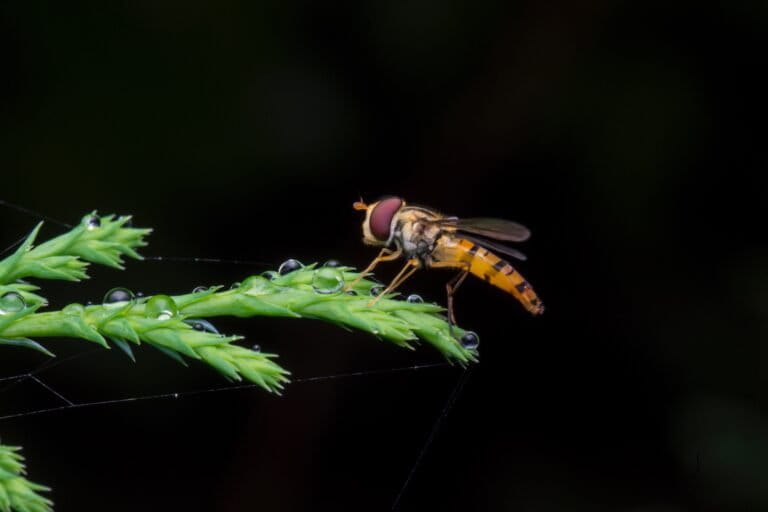
Insects are the backbone of global food systems. Pollinating over 70% of cultivated crops and 90% of flowering plants, insects are one of the major ecosystem service providers, offering services valued around US$235 to 577 billion. Yet most discussions on pollination centres exclusively around bees, side-lining other crucial pollinators in research, policy and public attention. With plummeting pollinator populations worldwide, focus needs to be shifted onto other overlooked pollinators like flies, wasps, beetles, moths and butterflies. Flies stand out as the second line pollinators, next to bees, bolstering 551 species of plants from 71 families. Some of the families of flies involved in pollination are Syrphidae (hoverflies), Bombyliidae (beeflies), Calliphoridae (bottle flies), Tachinidae (tachinid flies) and Anthomyidae (root maggot flies). Among these, hoverflies offer much efficient pollination in terms of adaptability and diversity. Thriving in meadows, peats and densely packed urban settlements, hoverflies glide across farms and forests ensuring pollination with utmost precision. What are hoverflies? Hoverflies are members of the Syrphidae family of Diptera. With over 6,000 species in 377 genera across the globe, they thrive everywhere except the harsh climates of tundra and deserts. They showcase diverse life cycles and remarkable mimicry, yet their ecological roles are often underappreciated. As their name suggests, hovering is a signature behaviour of these flies, and is associated with ‘food hunt’. However, this plays out differently for males and females. For instance, females drift amongst the foliage to inspect a suitable environment for laying eggs, whereas males defend their territory through their…This article was originally published on Mongabay