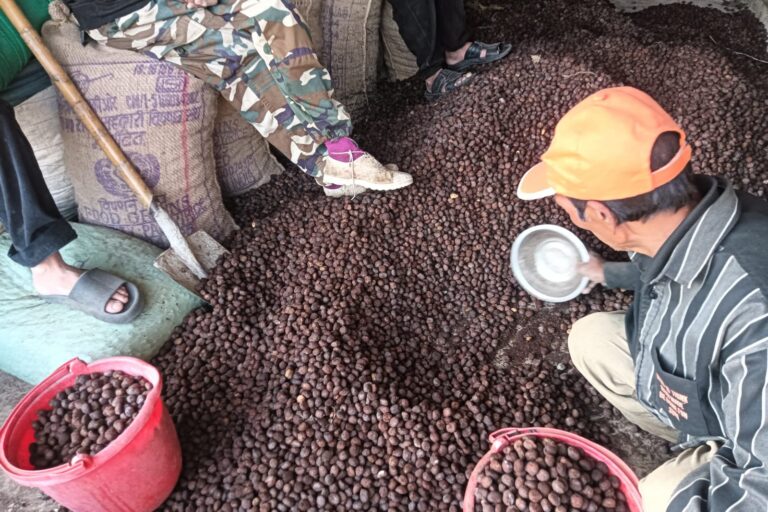
In 2023, farmers in Mizoram’s Saitual district came together to form the Saitual District Tung Grower Association to streamline the cultivation and post-harvest marketing of a tree-borne oilseed from the tung tree, which has significant industrial applications and commercial potential. What began as a small collective has since expanded rapidly. Today, more than 600 farmers across the district have joined the association, hoping to build a viable economic future around a crop that remains largely unfamiliar to most of India. Farmers are now converting several hectares of land to cultivate the tung tree, primarily Vernicia fordii and Vernicia montana, two closely related species whose seeds yield tung oil, a non-edible but highly valuable drying oil. However, experts caution the risks of expanding monoculture plantations on the fragile slopes in the mountain state. Tung oil and its industrial applications Tung oil is primarily extracted from V. fordii, with oil from V. montana occasionally blended in limited proportions. Under favourable conditions, tung trees begin yielding fruit from the third year, though most assessments place the first reliable harvest at around the fifth year. The trees typically remain productive for 24 years, reaching peak yields between 10 and 12 years of age. Tung oil yields generally range from 300 to 450 kilograms per hectare, with the seed containing about 30-40% oil. The oil has been historically used in products from caulk to insulating compounds. Renowned for its capacity to harden into a tough, water-resistant film upon exposure to air, it is widely used…This article was originally published on Mongabay