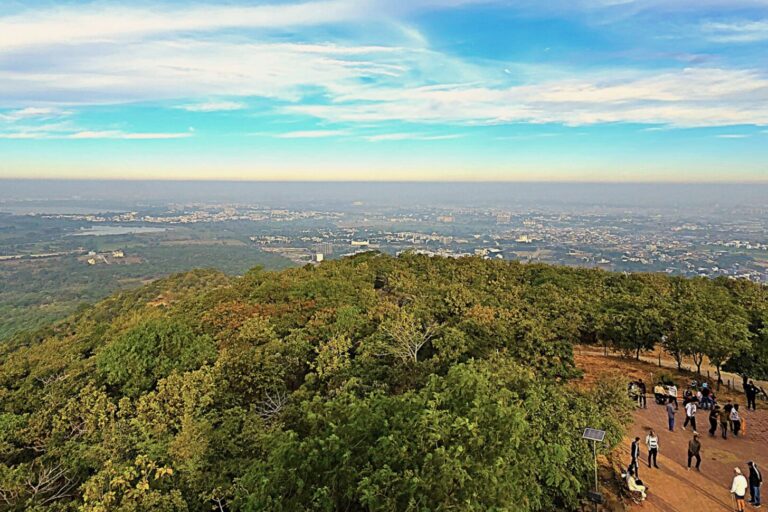
Across India, protected areas are witnessing a steady rise in visitors. From sprawling national parks to small wildlife sanctuaries on the fringes of major cities, nature tourism is booming. This growth is often celebrated as a sign of increasing public interest in conservation. But beyond the headline of visitor numbers, a quieter and a more complex question remains largely unexamined: what happens to ecosystems when popularity turns into pressure? Ralamandal Wildlife Sanctuary, located on the outskirts of Indore in Madhya Pradesh, offers a revealing case study. Spread across an area just over 2 square kilometres, Ralamandal is one of the smallest wildlife sanctuaries in the state. Yet its proximity to the rapidly expanding Indore city makes it one of the most heavily visited forest landscapes in the region. The sanctuary’s history dates to the Holkar period, when the hill forest served as a royal hunting ground, or shikargah. Today, a hilltop structure built in 1905 serves as a museum, offering panoramic views of Indore, Bilawali Tank, and the surrounding mountain hills such as Devguradiya, Umrikheda, Datuni, Renuka and Rann Bhawar. This blend of nature and history attracts a diverse crowd — from fitness enthusiasts and students to weekend tourists. However, forest department data has revealed that the average revenue generated per visitor has stagnated or declined. Visitor data from the Madhya Pradesh Forest Department shows that a large share of this footfall is concentrated between May and September. During these months, daily visitor numbers rise sharply, placing heavy pressure on…This article was originally published on Mongabay