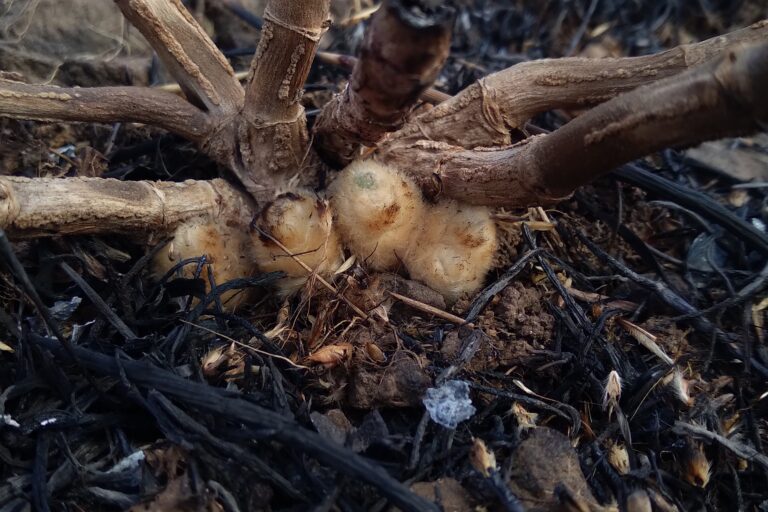
The northern part of the Western Ghats, a UNESCO-recognised biodiversity hotspot known for its remarkable diversity of seasonal herbs, has a dramatic landscape. During the monsoon months between June and September, it experiences intense rainfall. Its open grasslands and rocky plateaus become awash in verdant green and then erupt into colour as seasonal plants leaf and flower across its terrain. But once the rains withdraw in October, the terrain turns harsh, and until May, all the plants in this area face intense heat, drying winds, and recurring surface fires. Some plants have an unusual strategy to survive these extreme seasonal cycles, finds a recent study. They wrap their dormant buds in dry, cottony coats to help them survive the inhospitable months. Researchers have named this adaptation ‘Xerocoma’, deriving it from the Greek words ‘xero’ (dry) and ‘kóma’ (tuft). These structures occur as dry, cottony balls that form at the rootstock — the area where the shoot and root meet, either just above or just below the soil surface. What is Xerocoma? Just before monsoon sets in, as the plant’s buds begin to grow, the Xerocoma also elongates with the growing buds to completely envelop them during this critical period. Eventually, as young leaves emerge, the cottony mass of the Xerocoma loosens to allow the expanding leaves to grow. Mandar Datar, who is a professor at the Agharkar Research Institute in Pune, and an author in the paper, emphasises that Xerocoma is a distinct plant organ rather than a fungal association…This article was originally published on Mongabay