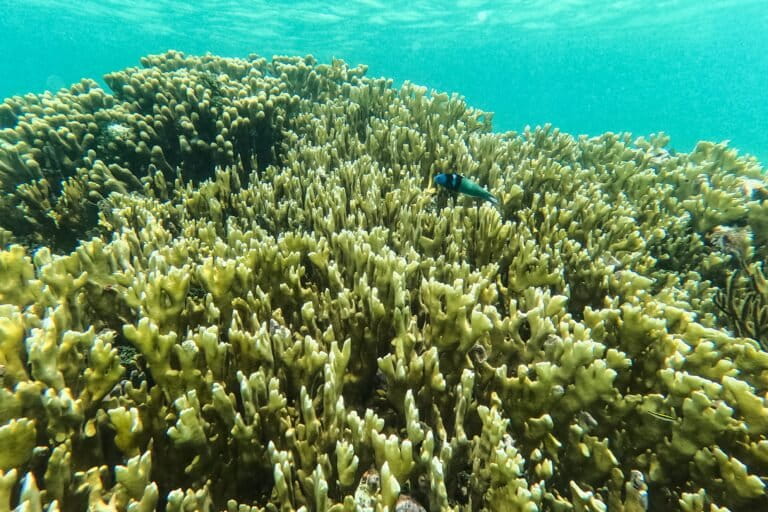
As UN Secretary-General António Guterres says, El Niño is being “supersized” by a warming climate. The UN Environment Programme (UNEP) warns that coral reefs are being hit by new bleaching events before they have had time to recover from earlier ones. UNEP likened reefs to “an overmatched boxer” taking repeated blows, citing findings from the Global Coral Reef Monitoring Network (GCRMN) of the International Coral Reef Initiative (ICRI). The outlook is stark. “Multiple lines of evidence indicate that the majority (70-90%) of warm water (tropical) coral reefs that exist today will disappear even if global warming is constrained to 1.5°C,” as the Intergovernmental Panel on Climate Change warns. The headline, however, is that marine heatwaves are narrowing the window for coral reef recovery. “Coral reefs once had decades to recover after major bleaching events. Today, they’re lucky to get five or six years,” said Manuel González Rivero, a reef expert at The Australian Institute of Marine Science and lead author of the GCRMN report. “And for many reefs affected by the unprecedented marine heatwaves in 2024, this year’s El Niño likely means they’ll have had little more than a year to begin recovering before being hit again.” “India’s own reefs show the same trend,” said marine biologist Amruth P., assistant professor in the Department of Life Sciences at CHRIST University, Bengaluru. “A 24-year study in Lakshadweep recorded coral cover falling from about 37% to under 20% since 1998 after repeated marine heatwaves.” The study by the Mysuru-based Nature Conservation Foundation…This article was originally published on Mongabay