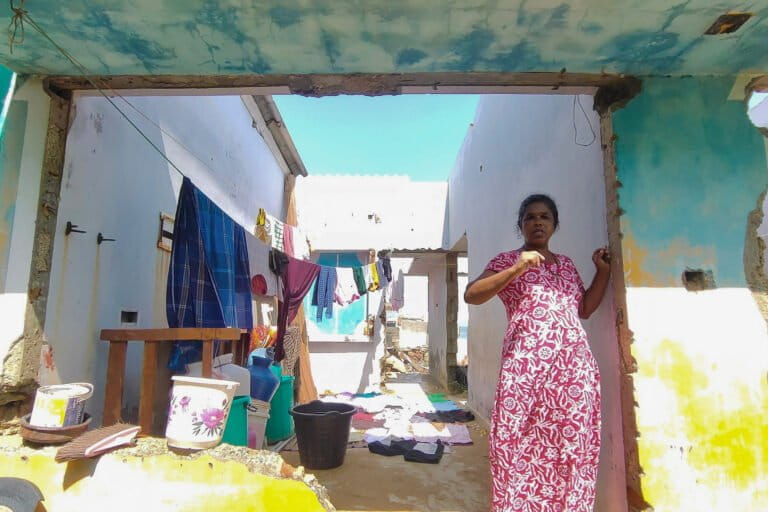
“This was our home,” says 43-year-old Baby Titus, pointing to a green-painted house secured with a rusty lock. Waves were repeatedly crashing on the right side of the house. “The sea kept entering and receding, and it caused a short circuit inside the house. You would get an electric shock wherever you touched.” A road past Kollamkode Church in Thiruvananthapuram leads to the Arabian Sea, where rows of houses like Titus’s line the shoreline. Many houses here have been engulfed by the sea. The remains of those houses, along with the granite boulders dumped into the sea for a seawall, are constantly battered by the waves, each surge crashing against them with a frightening roar. Kulathoor grama panchayat is the southernmost grama panchayat in Thiruvananthapuram district in Kerala. Its coastal wards, including Pozhipallivilakam, Mullassery, Kollamkode, Paruthiyoor, Pozhikara Beach and Pozhiyoor, have been facing severe coastal erosion for decades. Many of these wards have only seven or eight rows of houses remaining, out of about 100. Of those that remain, only a few are inhabited. Fearing the house was structurally precarious and hence, unsafe, Baby Titus now lives in a rented two-bedroom house next door with her husband and three adolescent children, paying ₹2,000 a month. The house’s owners have moved elsewhere due to flooding. Baby Titus spends the night listening anxiously to the sound of every crashing wave, wondering whether the sea is coming in — a reality shared by the families living along the coast. Baby Titus’s coastal home…This article was originally published on Mongabay