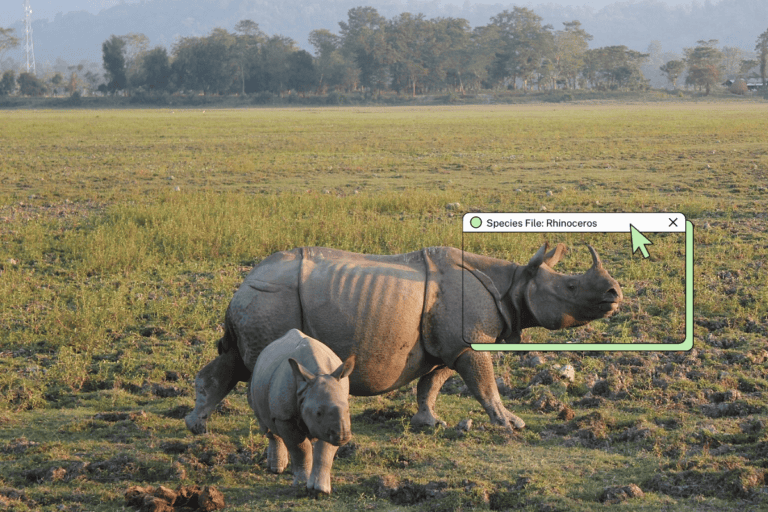
Conservation efforts have re-established the greater one-horned rhinoceros in Assam’s Manas National Park. The species had once been wiped out from the park but was brought back through wild-to-wild translocation and rhino rehabilitation programmes. A recent study of the re-established population offers encouraging signs of adaptation in its restored habitat. The greater one-horned rhino (Rhinoceros unicornis) is the largest of the three rhino species found in Asia. It is identified by a single black horn, about 8-25 inches long, and grey-brown hide with skin folds that give it an armour-plated appearance. It’s about half the weight of an elephant, going up to 2,700 kilograms and is around 6.5 feet tall. Despite its size, the rhino is a good swimmer and spends considerable time in wetlands and grasslands. It mainly feeds on grasses, leaves, branches of shrubs and trees, fruit, and aquatic plants. The greater one-horned rhino now numbers at around 4,075 individuals found only in the grasslands of India and Nepal. The IUCN Red List classifies the species as vulnerable, which means it faces a high risk of extinction in the wild. In India, it receives the highest legal protection under Schedule I of the Wildlife (Protection) Act, 1972, and is listed in Appendix I of CITES, which bans international trade. Rhinos play an important role in shaping grassland and wetland ecosystems. However, habitat loss and fragmentation, invasive species and human-animal conflict remain major threats to the species. The rhino has also faced illegal hunting for its horns. In a…This article was originally published on Mongabay