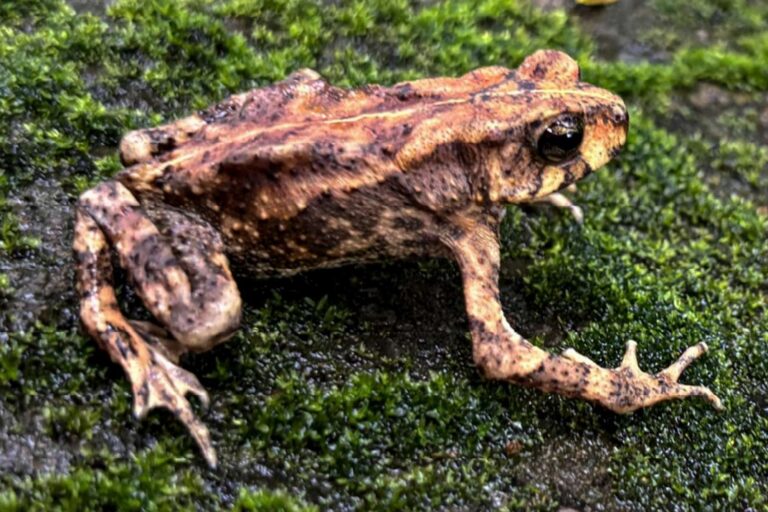
A May 2026 study describes a new species of toad (Duttaphyrnus phawngpui sp. nov.) from Phawngpui National Park, located in southeastern Mizoram along the border with Myanmar. Researchers studied two individuals found at the hilltops. The species was named after Phawngpui, Mizoram’s highest mountain peak at 2,157 metres above sea level. True toads of the Duttaphyrnus genus occur as many species in varied habitats in South and Southeast Asia — often even in polluted areas. However, the newly described species and its closest relatives, D. stuarti, D. chandai and D. dhara, are largely restricted to the higher ranges of the eastern Himalayas, according to Jayaditya Purkayastha, a co-author of the study. Morphological and DNA analyses of the two specimens collected helped identify distinctions from the previously known species. Researchers encountered D. phawngpui sp. nov. individuals among leaf litter on the forest floor along the edge of a trail leading to the summit of Phawngpui at above 2,000 masl. The area was abundant in dense ground cover in the form of shrubbery as well as bamboo patches, and had relatively low human disturbance, hinting at the toad’s preferred ecosystem features. D. phawngpui and its relatives are facing the immediate threat of habitat loss, as the tops of mountains (sky islands) that offer ideal conditions, shrink in size. “They are habitat specific, not generalists, meaning they can only survive in certain conditions. D. phawngpui is a ground dwelling frog that requires grassy patches, high humidity and forest streams, especially for breeding,” says…This article was originally published on Mongabay