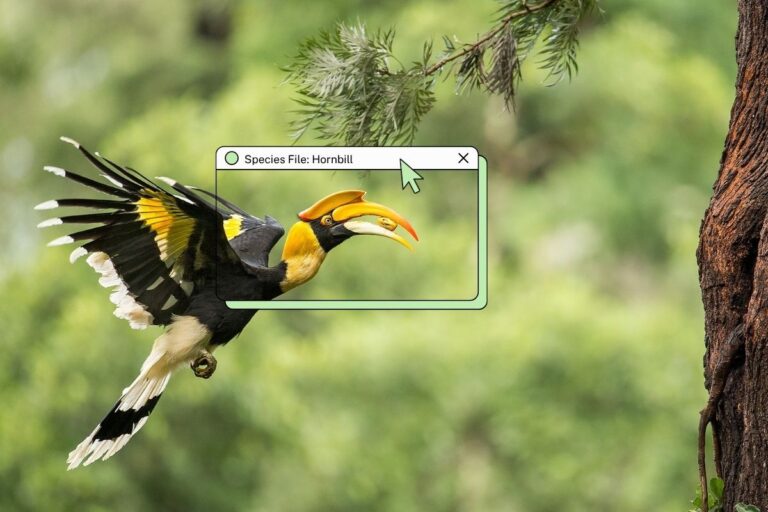
Species File: Exploring India’s biodiversity, one species at a time. In July, four Malabar pied hornbills were spotted near agricultural fields along the Muyyam river in Kannur district, Kerala, a first for the area. The sighting was considered a marvel given that the species is rarely spotted outside dense forests. Another hornbill species, the Indian grey hornbill, has been breeding successfully in Gujarat’s Gir National Park, where 40 individuals was translocated in 2021. Despite these instances, hunting and other threats continue to loom over the hornbills in India. In June, the forest department arrested three people in connection with the hunting of a protected hornbill in Assam’s Tinsukia district, highlighting continued pressure on the species. Hornbills (family Bucerotidae) are birds found largely in the tropics of sub-Saharan Africa and south and south-east Asia. They are easily recognised by their long, curved bills topped with a casque. The birds nest in the natural hollows of high-canopy trees, where females seal themselves inside tree cavities during breeding. Hornbills are often known as ‘farmers of the forest’ due to their propensity to consume fruits and disperse seeds far and wide. India is home to nine hornbill species. According to the International Union for Conservation of Nature (IUCN) Red List of Species, some, such as the great hornbill (Buceros bicornis) and Malabar grey hornbill (Ocyceros griseus) are listed as vulnerable. The Malabar pied hornbill (Anthracoceros coronatus) is near threatened with a declining population, while the Indian grey hornbill (Ocyceros birostris) population remains relatively stable.…This article was originally published on Mongabay