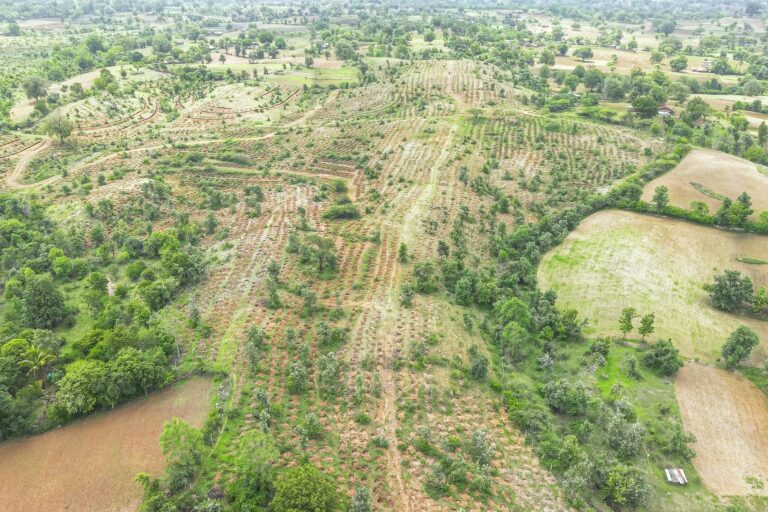
During my tenure as Divisional Forest Officer in Dewas, Madhya Pradesh, I walked through a seven-year-old mixed plantation. According to the plantation journal maintained by the range office, 14 species had been planted at the start. On the ground, teak dominated — a few others persisted in scattered numbers, and some had disappeared entirely. Their decline was not recorded anywhere. It had been quietly absorbed into an aggregate survival statistic that still read as success. Plantation drives in India are often measured by the number of saplings planted and their survival rates, which portray an image of progress. But do these numbers reflect genuine ecological restoration or just denser tree cover? Indore district provides insight into this issue. Working Plan data from Indore Forest Division showed stable plantation targets, yet several native species fell to less than 1% of the tree population, a trend not captured in plantation reports or remote-sensing maps. This decline did not stem from felling operations or from a single visible event. Instead, it developed quietly, due to selective extraction, poor regeneration, grazing pressure, and climate stress. The greater issue is a management focus on numbers rather than on which species survive. Recognising this, the intervention emphasising Rare, Endangered and Threatened (RET) species raises a crucial question: Should forestry success be measured by total tree cover, or by the sustained presence of native biodiversity? The monsoon landscape at Shankargarh Hills in Dewas district, Madhya Pradesh, where community-led restoration is reviving native biodiversity. Image by Samarjeet Jadav.…This article was originally published on Mongabay