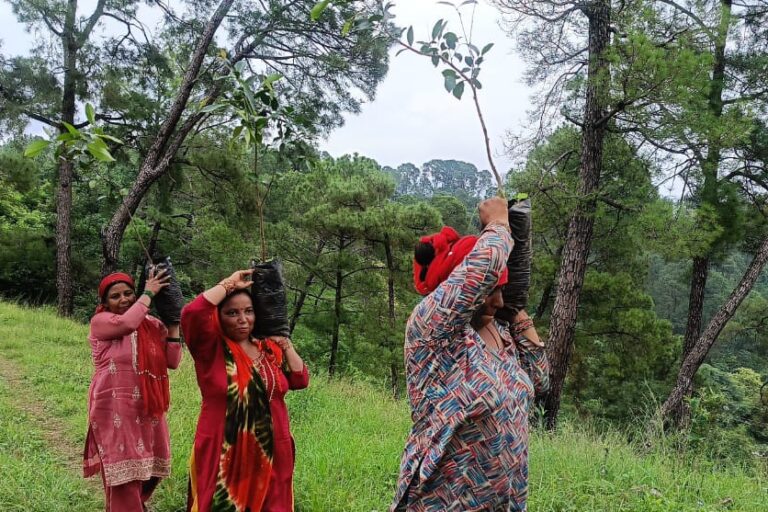
In 2022, Pushpendra Rana and his colleagues projected using a machine learning model that Himachal Pradesh would spend $100 million (approximately ₹95 crores) between 2020 and 2030 on planting trees that were unlikely to survive. They published the findings in the journal World Development. But Rana, a serving Indian Forest Officer, didn’t just stop at drawing attention to the wasteful tree-planting practices in his state. Over the next four years, he focused on developing a restoration decision-support tool to aid in more successful tree planting in the country. Rana partnered with RootIQ Labs Pvt. Ltd., a New Delhi-based artificial intelligence company, to develop WhereToPlant Bot, a chatbot that can predict the survival probability of saplings in a given location based on different climatic and environmental parameters. This chatbot can be accessed by anyone with a Telegram account. Once they share their location pin, it uses machine-learning models to quickly respond with a survival probability score and a star rating for any and all plants for the particular planting site, ranging from ‘no chance’ to ‘high chance’. The chatbot is currently exclusive to Himachal Pradesh, where it has been functional for over a year. The state forest department, mahila mandals (women collectives), yuvak mandals (youth groups) and self-help groups have taken its guidance to plant saplings, Rana told Mongabay-India. More than 200 women’s groups and 50 youth clubs used the tool in the field. DFOs and restoration practitioners as part of the Rajiv Gandhi Van Samvardhan Yojana (US$10.14 million community-driven plantation…This article was originally published on Mongabay