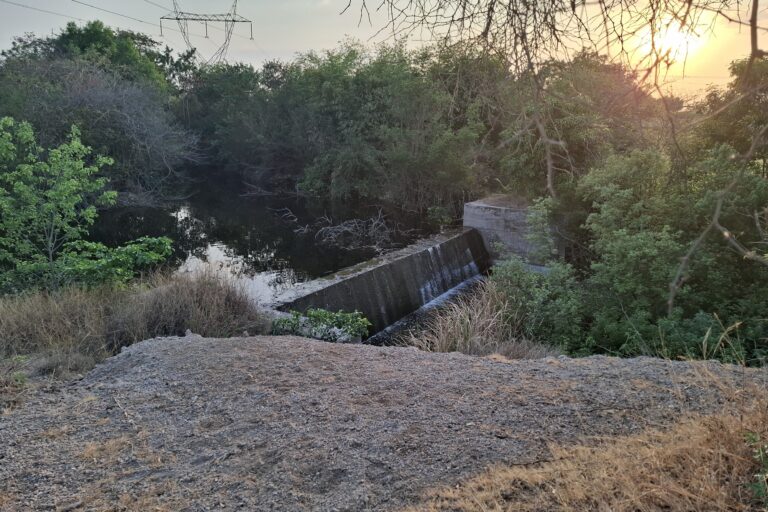
Amol Katkar was a college student in 2002 when Kiraksal experienced a terrible drought. “I remember children roaming from village to village on foot or on their cycles in search of drinking water. Cattle camps were set up and farmers were compelled to leave their homes to stay with their cattle in neighbouring villages,” shared Katkar, sarpanch of Kiraksal from 2015 to 2018. Kiraksal is a village located approximately 75 km east of Satara headquarters in Maharashtra’s Maan taluka and covers about 18 sq km of the Deccan Plateau terrain. The semi-arid climate here, with low average annual rainfall (300-500 mm), and weathered basalt, known locally as “khadak”, makes it a challenging landscape for agriculture. History repeated itself in 2012, when Maan taluka was again declared drought-hit by the Maharashtra government. “There was a severe drought, and Maan, Atpadi, and Sangola talukas were among the worst affected,” recalls Avinash Pol, Chief Advisor at the Paani Foundation. As before, Maan taluka was heavily dependent on tankers and farmers were once again forced to leave their homes and settle in cattle camps. It was at this crucial time that Pol visited Kiraksal, conducted a gram sabha, and advised Katkar (who was a gram panchayat member at the time) and a few other villagers on watershed management. Kiraksal village in Satara, Maharashtra, with its semi-arid conditions and low rainfall, has experienced severe droughts. In the last decade or so, local government bodies and citizens have banded together to improve watershed management. Image by…This article was originally published on Mongabay