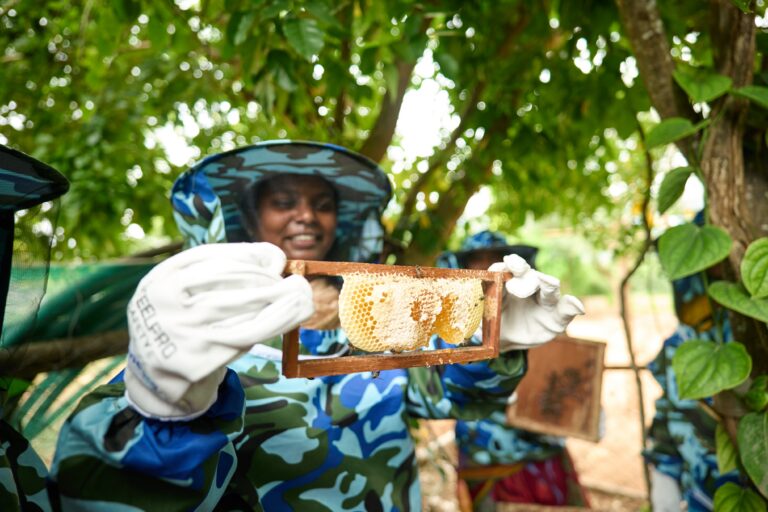
Neelavathi (37), an Irula woman from Vazhaithottam village in Tamil Nadu’s Nilgiris district, has had several reasons to celebrate over the past few months — a new occupation, a higher income, and enough money to celebrate the annual festival at her village temple, Mariyamman Kovil. “I have already sold around six litres of honey,” she says with pride. “Since I am the beekeeper at home, my family lets me keep the income for my own needs.” Apart from buying new clothes for herself and her kids, Neelavathi could buy two stone dosa griddles with the income from honey sales over time. Nine Irula women from the Sigur Plateau, including Neelavathi, gathered in a small community hall in Vazhaithottam to share with Mongabay-India their experiences of learning beekeeping. Over the past year, they have been trained to manage bee colonies in hive boxes, grow fruit trees that provide nectar for the bees, and harvest honey — an enterprise that has significantly boosted their household incomes. Women trained on beekeeping as a livelihood In April 2025, UNESCO partnered with the Nilgiris-based non-profit Keystone Foundation to bring its Women for Bees project to India. The Nilgiris Biosphere Reserve was chosen as the programme’s first site in the country, with activities launched across five locations in two states — Kerala and Tamil Nadu. Beekeepers at work in Nilambur, Kerala. In April 2025, UNESCO’s Women for Bees project debuted in India, at the Nilgiris Biosphere Reserve, engaging 50 Indigenous women from Sigur, Pillur, Kuzhiyoor, Wayanad…This article was originally published on Mongabay