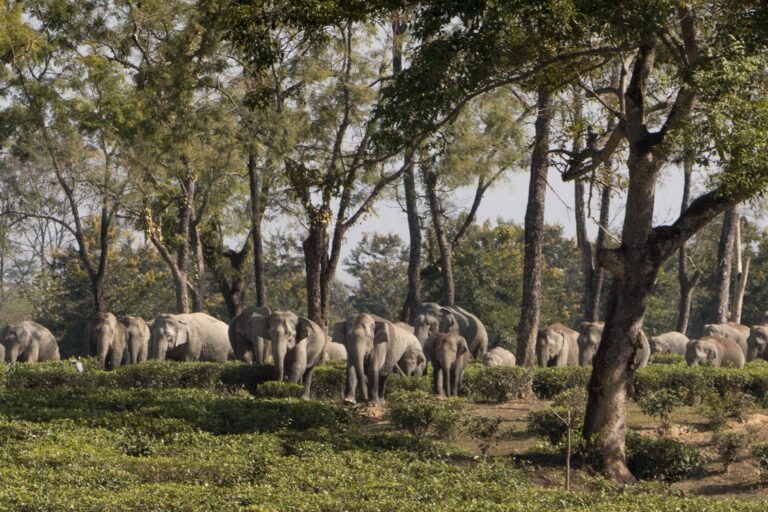
A new study analysing two decades of organised crop-guarding efforts to deter elephants from entering farms has found a counterintuitive outcome: villages with active monitoring recorded two to three times more elephant deaths. The elephant monitoring squads were set up in 2004 in Assam’s Sonitpur district where human-elephant conflict had led to high fatalities on both sides. The aim behind setting up the squads was to keep elephants away from human habitation to reduce conflict and hence reduce deaths. The study set out to find whether this intervention was indeed effective in decreasing deaths, but found increased elephant mortality instead. The study findings however, need to be viewed with caution. While they show an association between an increased number of Antidepredation Squads (ADSs) and increased elephant deaths, they are not a direct proof of causation, notes WWF-India which helped set up these squads in Sonitpur. The data shows that there are more elephant deaths in areas where ADSs have been deployed. The reason for increased deaths, says study author Nitin Sekar, could be that ADSs result in more regular, organised, and effective driving of elephants than occurs in communities without ADSs. “Elephants being chased in this way are less attentive to their surroundings (especially since drives often happen in the dark) and are more likely to run into an electric wire or fall into a trench,” he said. He cautioned that there could be other explanations too to why the findings showed increased mortality. “We have pretty strong evidence that…This article was originally published on Mongabay