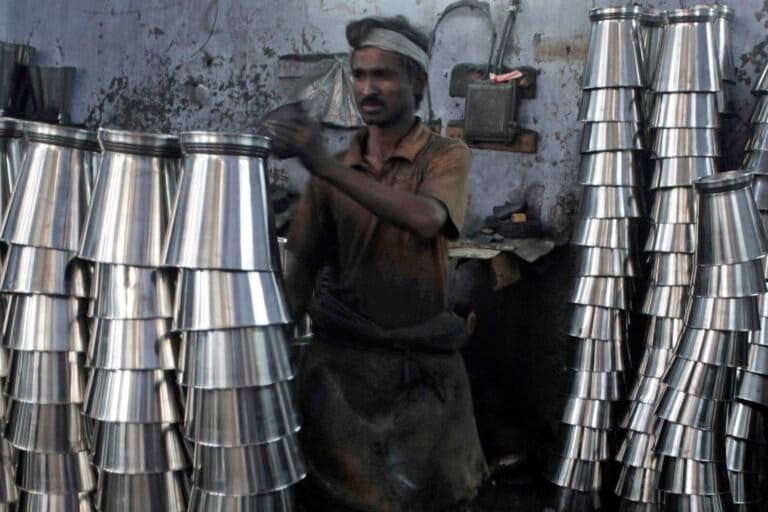
Decarbonising the steel industry — one of the largest coal consuming industries in India — focuses primarily on reducing carbon dioxide emissions to prevent the greenhouse gas effect. However, industrial processes in steel-making also cause air pollution, releasing sulphur dioxide, nitrogen oxides, and particulate matter, all of which adversely impact public health. A new analysis by the Centre for Research on Energy and Clean Air (CREA) tracked air pollution emissions disclosures from the Bokaro Steel Plant (BSL) in Jharkhand. It found that even though BSL met existing regulatory limits, pollution from the plant led to around 273 low birthweight births, and 284 preterm births each year. India’s installed crude steel capacity is projected to reach between 260 million and 280 million metric tons by 2035, keeping up pace with growing demand from the automotive, renewables, and defence sectors. It currently accounts for 10-12% of India’s carbon emissions, making it a key sector for decarbonisation on the way to net-zero emissions. The use of blast furnaces and basic oxygen furnaces in additional steel capacity could lock in a carbon-intensive process. Until innovations on how to replace coal in steel-making become viable, investing in better air monitoring and filtration could help reduce the impacts of air pollution caused by the same process, the CREA report suggests. “The emissions by the industry are self-reported or reported by a third party hired by the industry. The reported emissions for compliance are always below the standard, whether it is BSL, Bhillai Steel Plant, IISCO [Indian…This article was originally published on Mongabay