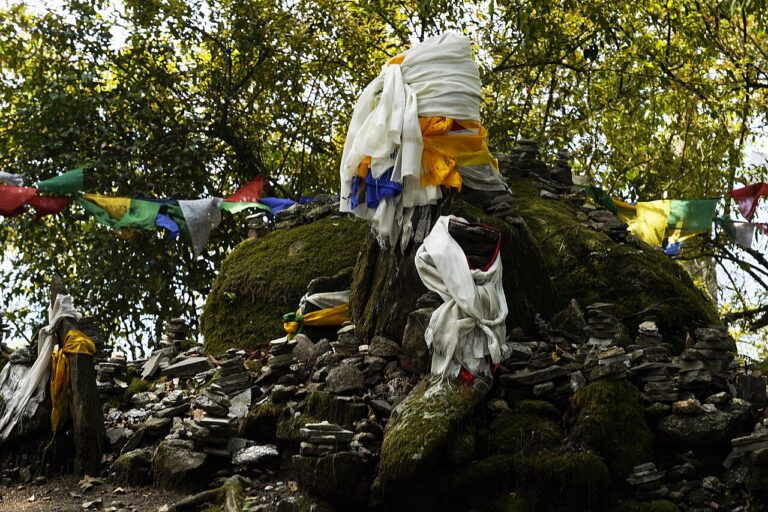
The sacred groves of India’s Himalayan region are home to a vast repository of medicinal plants. These culturally safeguarded spaces function as informal conservation areas, preserving medicinally important species while reinforcing community-led stewardship of biodiversity. Yet, despite their importance, both the ecological base and the knowledge systems associated with these groves remain largely undocumented and are increasingly vulnerable to erosion. A recent study by botanists at Sikkim’s SRM University documents 70 medicinal plant species used by Lepcha, Bhutia, Nepali, Limbu and Tibetan communities to treat 35 ailments. Conducted between July 2022 and June 2024, the study recorded the ethnomedicinal practices of Indigenous communities and traditional healers across West Sikkim. Biswajit Bose, the corresponding author of the study and Associate Professor of Botany at the university, says the documentation shows how culturally protected forest patches such as sacred groves, Gumpa forests and monastery Gumpa forests function as community-led conservation units for medicinal plant diversity in West Sikkim district. The village commons that preserve these groves demonstrate how traditional knowledge systems operate as conservation reserves. He adds that the study also offers “a baseline dataset for future pharmacological research”. A recent study in Sikkim documents 70 medicinal plant species used by Lepcha, Bhutia, Nepali, Limbu and Tibetan communities to treat 35 ailments. Image by Reena Chhetri. Locally called manay, this structure rotates with the force of naturally flowing water or wind, and is believed to protect the forests from natural calamities and to keep water and wind clean. Image by Reena Chhetri.…This article was originally published on Mongabay