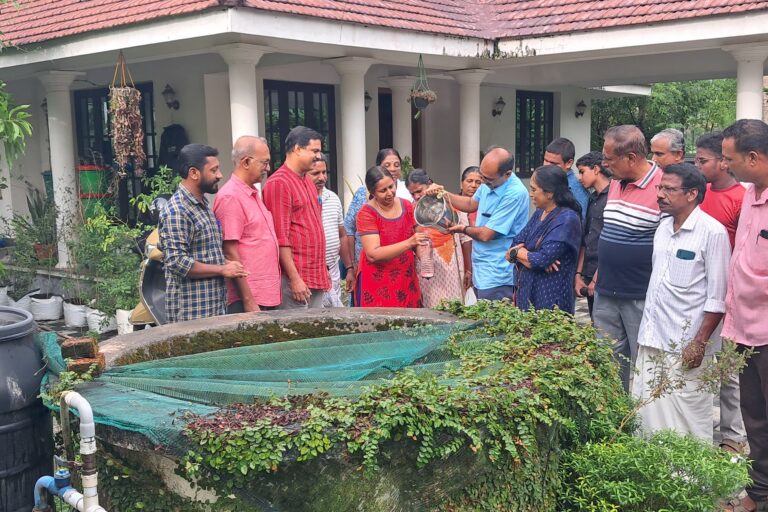
On a January morning in Thuruthikkara, a village in Kerala’s Ernakulam district, 53-year-old Vidhya Manjush stands beside her open well, checking the water level. Unlike in previous years, the water level remains steady. A community-driven push for rainwater harvesting and water testing ensures that the water from Manjush’s roof is filtered and directed into the well, helping recharge groundwater throughout the year. A few years ago, this wasn’t the case. As soon as the rains would end, groundwater recharge would slow down and the wells in the village would start drying up. The people would have to wait two to three days for a tanker to bring drinking water, Manjush recalls. And even then, it wouldn’t be potable. “The water often had black particles. I filtered it through a cloth and boiled it every time,” she says. The Ernakulam district typically receives very high rainfall, about 3000 mm annually, primarily between March and October. However, in Thuruthikkara, soon after the rains, the wells begin drying up and run dry by January, forcing households to depend on water tankers. To overcome this seasonal dependence on tankers, the village residents set up systems for rainwater harvesting, rainfall tracking and water quality testing, to make better use of the rainfall and reduce their water woes. In 2018, volunteers trained at Cochin University of Science and Technology (CUSAT) conduct chemical testing on well water in Thuruthikkara. Image by Suresh Thuruthikkara. When the residents came together Thuruthikkara falls under the Mulanthuruthy grama panchayat and is bordered…This article was originally published on Mongabay