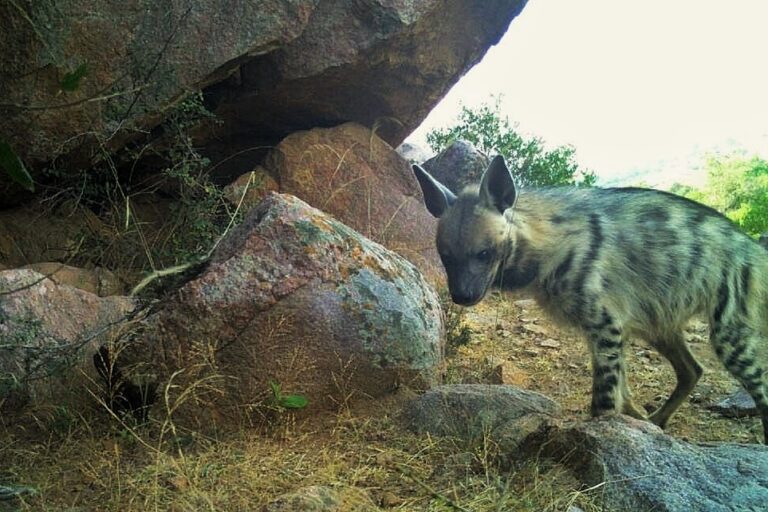
Studies have examined the role of multiple landscape types, such as open natural ecosystems, in supporting biodiversity and species conservation, with findings debunking the long-held assumption that only intensively managed protected areas have the capacity to aid and further the conservation of terrestrial biodiversity. Adding to this narrative is a new study from a semi-arid, open-canopy human-use landscape in Koppal district in North Karnataka, which finds that such ecosystems, even with intermittent human use, can provide habitats for globally threatened species and support their conservation. Researchers used key informant interviews with pastoralists and a single-season, single-species occupancy modelling framework to examine the distribution of three species: striped hyena (Hyaena hyaena), sloth bear (Melursus ursinus), and blackbuck (Antilope cervicapra). The study revealed that hyena, sloth bear and blackbuck occupied 52%, 26% and 63% of the landscape, respectively. Indian gray wolf (Canis lupus pallipes) was found in at least 76% of the landscape. “These landscapes in the Deccan Peninsula, with very few protected areas, are seen merely as agricultural landscapes both in the public imagination and in policies. But we found pockets of natural habitats, which we have called refugia in the paper, surrounded by agriculture that wildlife frequents. These are shared landscapes; these refugia are the reason that animals can partition spatially and temporally from humans,” says lead author of the study, Iravatee Majgaonkar. The study refers to “hallas” as one such refugium potentially supporting blackbuck populations in the district, despite intermittent human activity. Hallas are alluvial streams, part of the…This article was originally published on Mongabay