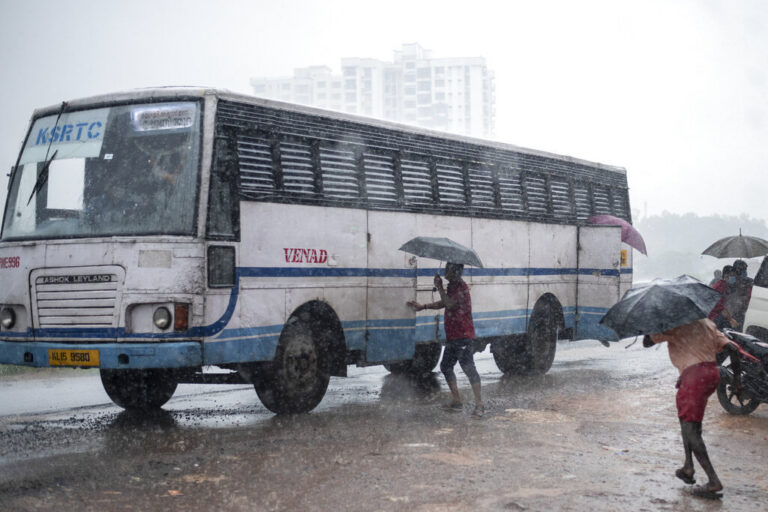
On a late evening in the first week of February, after what passed for a usual balmy afternoon, the night sky clouded over the fringes of the Kochi metropolitan area. Thunder cracked, lightning followed, and within minutes a burst of rain flooded roads, slowing traffic to a crawl in several stretches. Those caught without umbrellas could not walk a few yards to the nearest bus stop, while autorickshaws refused to ply because water was rapidly pooling on the streets. The downpour did not last long, but it was intense enough to overwhelm drains and leave behind pools of water. This rain was isolated and quite early, before the summer season of March to May. However, fast-forming thunderstorms are becoming an increasingly familiar risk in Kerala, especially during the pre- and post-monsoon months, explained Abhilash S, head of the department of atmospheric sciences at the Cochin University of Science and Technology (CUSAT). A recent study by his team mapping lightning strikes, wind gusts, and short-duration rainfall across Kerala state shows they cluster in distinct hotspots — causing flash floods in cities and landslides in the hills. Rapidly building thunderstorms Convective storms — the fast-building thunderstorms that often arrive with little warning — are a familiar feature of Kerala’s pre-monsoon weather. These are associated with thunder, lightning, heavy rain, hail, strong winds, and sudden temperature changes. They can occur year-round, but are most common in the summer. However, these storms are posing a triple threat — bringing intense rainfall, dangerous lightning, and…This article was originally published on Mongabay