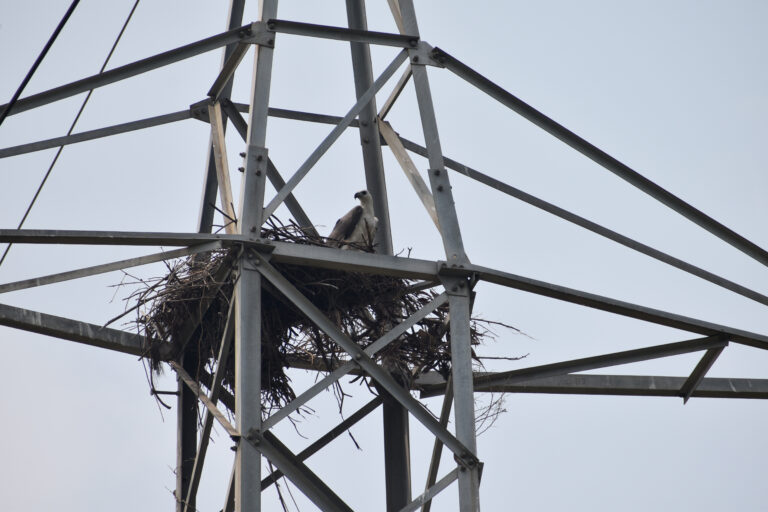
Torrential rain and strong winds frequently lash Odisha’s cyclone-prone coast, uprooting tall trees that once served as natural nesting sites for white-bellied sea eagles. As their coastal habitat changes due to frequent tropical cyclones as well as urban development activities, these raptors have been increasingly spotted nesting on telecommunication towers and electric pylons. However, new research, published in the Journal for Nature Conservation, raises concerns that artificial structures may be acting as “ecological traps” in rapidly-changing landscapes. While these structures are tall and provide clear vantage points to hunt for prey, the study observed, over four breeding seasons from 2021 to 2025, that nests built on towers consistently produced fewer fledglings than those built on trees. White-bellied sea eagles use the same nesting sites for years, making them vulnerable to habitat changes. While they have been sighted nesting on artificial structures in the country before, this study tries to understand the costs of this shift in detail. “This research is the first of its kind in India, where we have differentiated the breeding output of a raptor in different nesting structures,” said B. Anjan Kumar Prusty, head of the Department of Environmental Science at Berhampur University, Odisha, and the study’s corresponding author. Trees that got uprooted in cyclone Yaas in 2021 being cleared by fire and rescue personnel. Odisha’s cyclone-prone coast often sees tall trees that once served as natural nesting sites for white-bellied sea eagles being uprooted. (AP Photo) Monitoring nesting Some studies on raptors such as ospreys and…This article was originally published on Mongabay