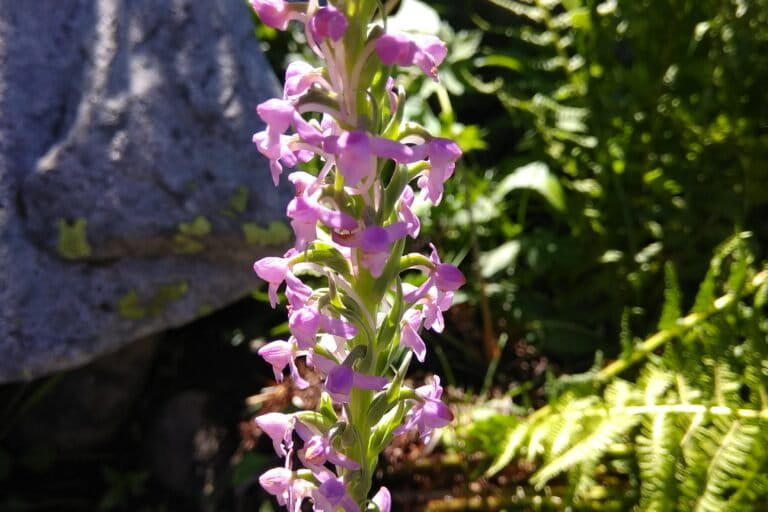
In the alpine meadows of the Himalayas, Dactylorhiza hatagirea — commonly known as the marsh orchid — has long been prized for its medicinal uses, its distinctive purple blooms attracting collectors and traders for centuries. However, this high-value herb, already endangered due to overharvesting and trade, now faces a largely overlooked threat: climate change. A new study by researchers at the University of Kashmir warns that rising temperatures and changing rainfall patterns could shrink the orchid’s already limited habitat over the next 50 years, increasing its risk of local extinction, even if projected habitat losses appear modest. Why orchids are vulnerable Climate change, habitat loss, and overexploitation are among the leading threats to global biodiversity, with mountain environments expected to be especially vulnerable. Orchids are a highly specialised and sensitive group of plants, making them particularly vulnerable to changes in habitat and broader environmental conditions. “This vulnerability stems from their narrow ecological niches, specific habitat preferences, and strong dependence on mutualistic associations with orchid mycorrhizal fungi, a fungi that lives in or around plant roots,” says Manzoor Shah, Professor of Ecology at the University of Kashmir. “They help plants absorb water and nutrients.” He adds that many orchids also exhibit a high degree of pollinator specificity. Climate change–driven shifts in phenology — annual calendar events such as leafouts, flowering, fruiting, fall for different types of plants — may cause mismatches between flowering times and pollinator availability. “Thus, the complex life cycle of orchids and their intricate interactions with fungi and…This article was originally published on Mongabay