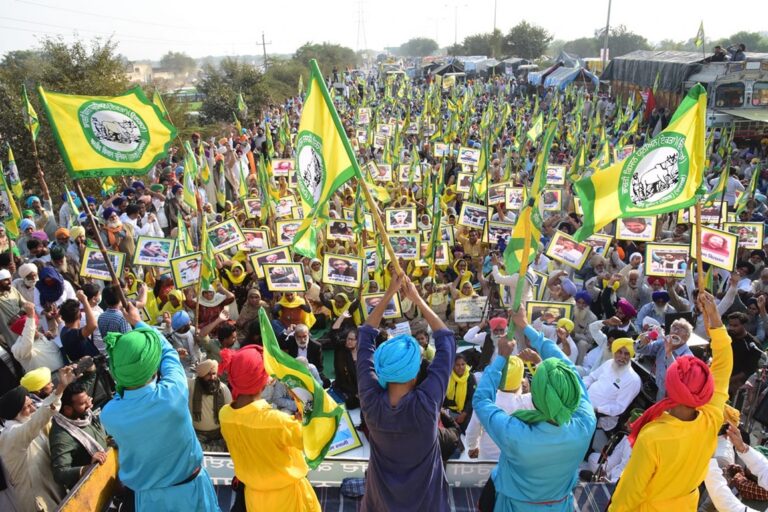
On February 6, the U.S. and India announced that they have reached a framework for an interim reciprocal trade agreement which lists tariff reductions on several products traded between the two countries. However, the announcement has raised concern among farmer groups and food security activists over potential increases in agricultural imports, including genetically modified (GM) grain. The India-U.S. joint statement says, “India will eliminate or reduce tariffs on all U.S. industrial goods and a wide range of U.S. food and agricultural products, including dried distillers’ grains (DDGs), red sorghum for animal feed, tree nuts, fresh and processed fruit, soybean oil, wine and spirits, and additional products.” India has also agreed to address long-standing non-tariff barriers affecting U.S. food and agricultural exports, the statement says. The interim agreement serves as a stepping stone to a more comprehensive bilateral trade agreement between the two countries. Raising concerns over the tariff concessions on U.S. agricultural products, farmer organisations have called for nationwide protests on February 12. In a statement released on February 7, ASHA-Kisan Swaraj, a farmer network, said removal of tariffs on a wide range of agricultural imports could depress domestic prices, affect farmers and horticulturists, distort feed and livestock markets, and increase dependence on imports. The group said imports of DDGs and red sorghum could affect farmers growing maize, jowar, and soybean used in fodder and animal feed. It also raised concerns over soybean oil imports, particularly at a time when soybean farmers are reporting distress in Maharashtra, Telangana, Madhya Pradesh,…This article was originally published on Mongabay